Design Management and Strategy
Graduate Identity: The Transformation Strategist - transform what already exists.Design what organisations become next.
Design Management and Strategy
Graduate Identity: The Transformation Strategist - transform what already exists.Design what organisations become next.
Design Management and Strategy
Graduate Identity: The Transformation Strategist - transform what already exists.Design what organisations become next.
Duration
4-Year Degree - B.Tech.
Eligibility Criteria
60% in Class XII
((Any Stream) or equivalent IB / A-Levels with Maths
Next Intake
July 2027
Session begins from 17th July 2027
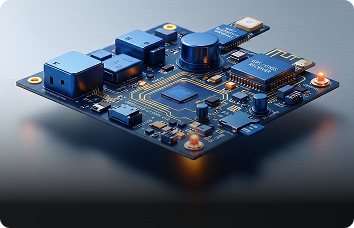
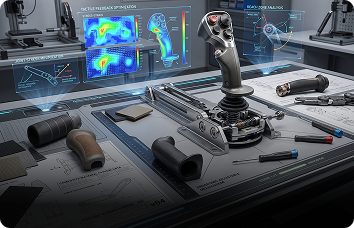
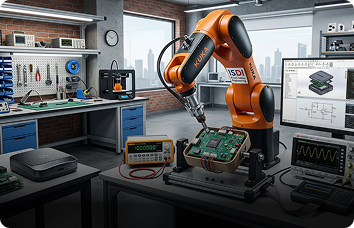
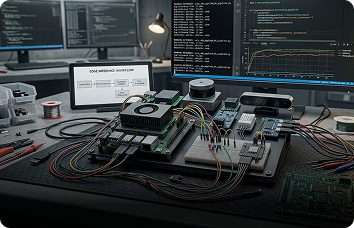
The B.Tech Design Engineering program is a four-year degree aimed at cultivating product engineers who design, build, prototype, and deploy smart products. It combines a solid foundation in mathematics, electronics, embedded systems, software, and applied AI with a focus on human-centered design and system-level integration. Graduates are trained for all stages of the smart product lifecycle, ensuring ethical usability and responsible engineering. The program integrates engineering rigor with design practice, addressing crucial challenges such as manufacturability and user-focused product behavior.
Digital 3D Modelling
Edge Computing
Ergonomics Engineering
Human Factors & Ergonomics Engineering
Product Innovation
Smart Product Prototypes
AI Design Engineer
Embedded Systems & IoT Product Engineer
Ergonomics Engineer
Design Engineer
Human Factors & Product Experience Engineer
Edge AI / Applied ML Design Engineer
Rita Ashra
Kanika Sharma
Divya Bindra
Ashutosh Deshmukh
Malvika Mahidhar
Sanjana
Mehta
Gavin
Remedios
Malvika Mahidhar
Rohan
Marathe
Janaki
Sonalkar
Jui
Karhadkar
Prathamesh Ambokar
Ashish
Kapoor
Manjit Singh Rajput
Sania
Sheikh
Ashish
Kapoor
Peeyush
Gupta
Ashish
Kumar
Jinal
Sangoi
Kanchi
Malhotra
Purushottam
Sawaran
Kushagra Gautam
Vipul
Mane
Sanjana Nanodkar
Shirali
Tyabji
Dr.
JyotiSaini
Mena Malgaonkar
Antara
Paul
Kanupriya Sharma
Rucha Suryavanshi
Mohit
Bhardwaj
Aashi lath
Assistant Manager - UI/UX Designer
Aastha malhotra
Senior User Experience Designer
Abha mehra
Executive Designer
Akanksha srivastav
UI Designer
Ananya gupta
Executive designer
Aveera juss
Lead Designer - HMI Design
Ayushi jhaveri
Graphic Designer & Social Media Executive
Chiraj rajdeo
Digital Studio Manager
Dhruvi shah
Designer
Ishani kulkarni
Think Design Collaborative
Jena shah
Art Director
Shreya shivakumar
Senior Graphic Designer
Vadanya Shrotriya
Associate Account Manager
Vani chandra
Digital Designer

Our Globally Benchmarked Curriculum

Semester 1

Develops fundamental skills in calculus, physics, computational Python programming, and quick physical-digital prototyping to transform unstructured problems into functioning concepts.
Design, Systems & Visualisation Studio 1 
Introduces design thinking, observation, problem framing, visualization, and systems representation through hands-on, iterative projects.
Engineering Mathematics I Calculus & Linear Algebra
Covers differential and integral calculus, vectors, matrices, and linear algebra as a practical mathematical toolkit applied to real engineering problems.
Physics of Engineered Systems
Explores fundamental physical principles—including mechanics, electricity, and magnetism—underlying sensors, actuators, and electromechanical hardware.
Computational Thinking & Programming 1
Teaches algorithmic problem-solving and programming fundamentals using Python through writing, testing, and debugging code from scratch.
Making & Prototyping Lab 1
Provides hands-on experience with physical tools, digital 3D modeling, rapid prototyping, and electronics to build testable physical artifacts.
Communication for Technology & Design
Develops technical writing, presentation skills, documentation standards, and professional feedback habits tailored for engineering and design contexts.
Skill-Up Elective
Skill-Up Elective offers specialized learning opportunities beyond the core curriculum, enabling students to explore emerging tools, creative practices, and interdisciplinary skills that enhance professional growth.
ATLAS Elective

Semester 2

Moves from concept to proof via user research, statistical reasoning, fundamental electronic circuits/sensors, materials science, and introductory AI.
Design, Systems & Human-Centred Studio II
Focuses on moving from problem framing to evidence-led intervention using user research, system mapping, iterative prototyping, and integrating physical, digital, or intelligent elements into a prototype.
Engineering Mathematics II — Probability, Statistics & Modelling
Introduces probability, statistics, uncertainty, basic differential-equation reasoning, and mathematical modelling applied to engineering datasets and quantitative decision-making.
Computational Thinking & Programming II
Covers object-oriented programming, core data structures, modular software design, and the responsible, critical use and ownership of AI-assisted development tools.
Electronics, Sensors & Intelligent Systems
Introduces basic electronic circuits, analog/digital concepts, sensor and actuator interfacing, and microcontroller-level interaction to make physical systems sense and respond.
Data, AI & Emerging Technology Foundations
Provides a programme-neutral introduction to data representation, basic machine learning, generative AI, evaluation of AI reliability, and associated ethical and safety considerations.
Materials Science & Engineering
Explores the relationship between material structure, properties, processing, and performance across metals, polymers, composites, ceramics, and semiconductors with a focus on sustainable selection.
Technology, Society & Sustainability
Integrates professional ethics, safety obligations, intellectual property, environmental responsibility, and societal impacts into technology choices and engineering decisions.
Why our Year 1 outpaces every
other design school?
ISDI School of Design
Multidisciplinary Exposure
Offers a Major–Minor Pathway where students combine core specialization with a secondary focus called a minor.
Integrated Design Thinking
Combines design thinking, observation, and research fostering strategic and creative problem-solving.
Holistic, Future-Ready Learning
Includes forward-looking courses like Sustainable System and Time, focusing on environmental impact.
Other Design Schools
Holistic, Future-Ready Learning
Other design schools follow single-track, restricting students to one specialisation throughout the program.
Theory–Practice Gap
Often separates theory and practice, introducing research much later as an
after-thought.
Aesthetic-Centric Focus
Primarily emphasizes form and aesthetics, with limited focus on sustainability or systems thinking.

Semester 3

Combines physical form with digital interfaces and fundamental AI/ML, establishing design principles in structural mechanics, material selection, and user data analysis.
Smart Product Design Studio I: Connected Devices & Digital Interfaces
Focuses on designing products that integrate physical form, digital interfaces, and connected device behaviour.
Engineering Mechanics & Materials Science
Introduces fundamental mechanics and material selection principles to ensure product durability, structural integrity, and manufacturability.
Introduction to AI & Machine Learning
Covers foundational AI and machine learning concepts to help evaluate and implement basic ML models in product design.
Statistics for Designers
Teaches applied statistical methods and data analysis to validate user research and support evidence-based design decisions.
Open Elective I
Offers interdisciplinary learning outside the core curriculum to broaden problem-solving perspectives in product design.
Design Communication & Sketching
Builds visual communication and rapid sketching skills tailored for ideating, rendering, and presenting product concepts.
Concepts and Sketches - Conceptual Visualization
Trains students in conceptual sketching to visualize ideas, explore symbolism, and create identity-driven logos and graphic marks that communicate values and brand personality effectively.

Semester 4

Involves creating fully intelligent, connected goods by combining embedded microcontrollers, IoT connection, on-device ML models, and full-stack mobile/web applications.
Smart Product Design Studio II: Intelligent & Connected Products
Focuses on designing and prototyping products that integrate embedded behavior, connectivity, and AI/ML capability for data-responsive behavior.
Embedded Systems & IoT
Teaches microcontroller programming, embedded architecture, and IoT connectivity for building smart hardware with sensing, actuation, and wireless data transfer.
Applied Machine Learning for Smart Products
Covers applying and integrating trained machine learning models into functional prototypes for prediction, personalization, and sensor-data interpretation.
Mobile & Web Application Development
Introduces front-end development, API integration, and deployment to create digital interface layers for smart products.
Design Research Methods
Teaches qualitative and quantitative research methods—such as interviews, surveys, and observational studies—to translate user insights into actionable design decisions.
Open Elective II
Enables interdisciplinary exploration beyond the core curriculum to foster broader problem-solving perspectives.
Why our Year 2 outpaces every
other design
school?
ISDI School of Design
Narrative-Driven Learning
This year’s curriculum nurtures creative storytelling and visual communication that connects culture, emotion, and message.
Thinking through Making
Subjects strengthen ideation, visualization, and identity design from concept to execution.
Design with Insight
Subjects help students link user understanding with hands-on interface creation and testing.
Other Design Schools
Limited Creative Integration
Often focuses on static design principles, with minimal emphasis on storytelling or cultural narrative development.
Technique over Thought
Prioritizes software proficiency over conceptual thinking and creative strategy.
Sequential, Not Synergistic
Research and digital skills are usually taught in isolation, delaying practical application

Semester 5

Addresses real-world restrictions through an industry-sponsored product brief, while also studying human factors, cloud backends, IP legislation, and basic hardware electives.
Applied Studio I: Industry-Sponsored Smart Product Brief
Students work on a live industry brief to frame a problem, engineer a smart product solution, and build a functional prototype.
Human Factors & Ergonomics
Covers physical and cognitive usability principles, anthropometrics, and ergonomic guidelines to ensure product safety and comfort.
Cloud, APIs & Backend Systems for Connected Products
Focuses on backend infrastructure, cloud architecture, and API design to enable seamless data flows for smart product ecosystems.
Professional Elective I (Track Course)
A specialized elective selected from the Smart Hardware & IoT Core Track or the Shared ISDI Elective Pool.
Professional Elective II (Track Course)
A second specialised elective to deepen technical competency within the chosen track or elective pool.
Design Ethics, IP & Law
Addresses data privacy, legal regulations, and intellectual property rights required when commercializing connected products.

Semester 6

Fine-tunes and launches the industry project, expands hardware track specialization, explores venture entrepreneurship, and completes a credit-bearing summer internship.
Applied Studio II: Industry-Sponsored Smart Product Brief (cont.)
Continues the industry brief from Semester 5, focusing on refining, testing, and presenting the final product to stakeholders.
Entrepreneurship & New Product Development
Teaches business model validation, market feasibility, and commercialization strategies for taking smart products to market.
Professional Elective III (Track Course)
An advanced track course focusing on hardware engineering or shared AI-integrated product domains.
Professional Elective IV (Track Course)
Further deepens technical focus through specialized track or shared elective options.
Summer Internship (Credit-Bearing, Assessed)
A supervised industry placement providing practical experience on real-world engineering and product development workflows.
Open Elective III
An interdisciplinary course designed to broaden academic scope outside the core engineering curriculum.
Why our Year 3 outpaces every
other design
school?
ISDI School of Design
Cross-Platform Storytelling
Courses encourage narrative expression across print, digital, and interactive media.
Technology as Design Partner
Courses fuse coding, AR/VR, and data into the creative process.
Experiential Thinking
Courses emphasize creating sensory, spatial, and brand-based experiences that engage audiences emotionally.
Other Design Schools
Medium-Specific Focus
Learning is often confined to one format — print, digital, or motion — limiting experimentation across platforms.
Technology as a Tool
Digital tools are taught for execution, not as part of design thinking or concept development.
Static Presentation Focus
Projects are rarely documented or presented publicly, reducing real-world presentation experience.

Semester 7

Begin a self-directed, venture-ready capstone project with structured research methodology, seminars, and regular feedback from a designated industry mentor.
Capstone Studio I: Smart Product Venture / Prototype Development
Initiates the final-year capstone project where students frame a complex problem and build a venture-ready functional prototype.
Professional Elective V (Track Course)
A high-level track elective to support capstone technical requirements or specialized study.
Research Methods & Thesis Proposal
Teaches research methodologies, risk assessment, and structured writing to prepare a rigorous capstone thesis proposal.
Industry Mentor Practicum
Pairs students with industry mentors for professional guidance and feedback on capstone development.
Seminar
A structured forum where students present capstone progress and defend their design decisions before faculty and peers.
Open Elective IV
A final interdisciplinary elective to support personal interests or complement the capstone project direction.

Semester 8

Completes a fully built, end-to-end smart product capstone, followed by a second industry practicum and a final portfolio defense in front of an expert panel.
Capstone Studio II: Major Project / Thesis with Research
The culminating studio where students deliver a fully built, end-to-end smart product and research thesis.
Professional Elective VI (Track Course)
The final track course completing the student's technical specialization requirements.
Industry Internship II / Practicum
An advanced professional practicum to support capstone execution and deepen industry readiness.
Comprehensive Portfolio Defense / Viva
A final formal examination where students present and defend their complete multi-year design-engineering portfolio to external reviewers.

Core Track

The curriculum includes a dedicated core track in Smart Hardware & IoT Product Engineering, as well as two shared optional pools in AI-Native and AI-Integrated Product Engineering. These paths enable students to develop technical expertise in hardware design, embedded systems, software development, and applied AI.
Smart Hardware & IoT Product Engineering
The primary, dedicated track focused on physical product engineering, covering electronics, PCB design, embedded intelligence, wireless protocols, and design-for-manufacture.
AI-Native Digital Product Engineering
An optional shared track focusing on software creation using AI coding assistants, cloud backend infrastructure, AI design systems, and product strategy.
AI-Integrated Product Engineering
An optional shared track emphasizing the embedding of AI capabilities into products, covering data quality pipelines, computer vision, AI ethics, and MLOps deployment.

Graduate Pathways

Graduate pathways indicate the specialized profiles that students attain by combining core subjects with certain electives—for example, Hardware-First Engineers, AI-Software Hybrids, or Venture Founders. They train students for a variety of industry professions, including hardware R&D and smart product leadership positions, as well as research and entrepreneurial enterprises.
Hardware-First Smart Product Engineer
The default core pathway producing IoT/embedded product engineers who specialize in bringing connected hardware from circuit design to full field deployment alongside studio design skills.
Technical-Hybrid Engineer (Software & AI Integrated)
A customized pathway for students using shared electives to pair hardware engineering with skills in building companion apps, directing AI software tools, or integrating computer vision.
Honours-with-Research Pathway
A research-focused academic pathway satisfying UGC research credit requirements, preparing students for research labs or advanced postgraduate studies.
Entrepreneurial / Venture-Development Pathway
A startup-focused pathway leveraging capstone projects and venture development coursework to prepare graduates as technical co-founders or startup product leads.
Entrepreneurial / Venture-Development Pathway
A startup-focused pathway leveraging capstone projects and venture development coursework to prepare graduates as technical co-founders or startup product leads.
Why our Year 4 outpaces every
other design
school?
ISDI School of Design
Integrated Professional Skills
Courses teach financial literacy, ethics, management, and entrepreneurship within the curriculum.
Research-Driven Capstone
Courses conduct in-depth research and iterative design to produce user-centered solutions.
Polished Public Presentation
Documentation, Presentation, and Exhibition teach students to professionally showcase work, and communicate their process
Other Design Schools
Skills in Isolation
Professional or business skills are usually taught separately, not embedded in design learning.
Output-Centric Projects
Capstones often focus on final deliverables without structured research or iterative mentorship.
Limited Exposure
Projects are rarely documented or presented publicly, reducing real-world presentation experience.
01
Submit the Application Form
Apply for July 2027 Intake
02
Creative Aptitude Test
03
Portfolio Review + Interview
04
Final Selection & Offer Letter
Eligibility
Indian Boards (ISC / CBSE / State Boards)
  • Minimum 60% overall in Class XII
  • Mathematics is a mandatory subject
A-Levels (UK)
  • Minimum grades A, B, or C in any 2 subjects
  • Plus a Grade B or above in Mathematics
  • Total of 3 subjects required
International Baccalaureate (IB)
A minimum of 24 points, including:
  • 3 Higher Level (HL) subjects
  • 3 Standard Level (SL) subjects
  • Mathematics is mandatory
Why Design Engineering at ISDI x Parsons
Design at the Edge
of Human Behaviour
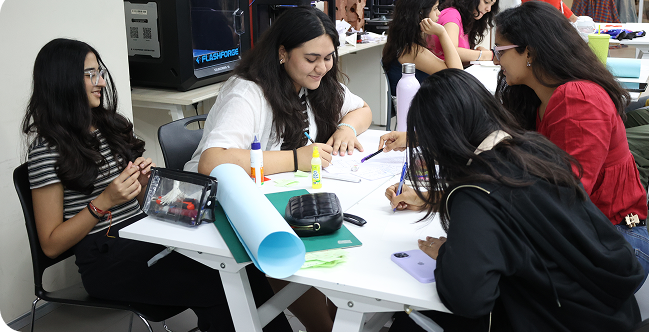
Our classrooms are live labs. You’ll ideate, iterate, fail, restart, and refine in spaces designed for doing, not just thinking.
The Only Program
of Its Kind
Curriculum shaped by Parsons,
New York reimagined for today’s
Indian context.
Your Mentors Are
Also Makers
Learn from practicing designers, strategists, and studio founders,
the people who design the world
you interact with.
Everything is a
Studio Experience
Our classrooms are live labs. You’ll ideate, iterate, fail, restart, and refine in spaces designed for doing, not just thinking.
The Future is Cross-
Disciplinary
Work alongside fashion designers, product innovators, entrepreneurs, coders, and media artists, because good ideas don’t exist in silos.

Where concepts meet execution,
in and beyond the classroom.
At ISDI, every project becomes part of a career-ready portfolio. From hands-on labs and design sprints to brand collaborations, internships, hackathons, and industry showcases, you graduate with real-world experience and work that speaks for itself.
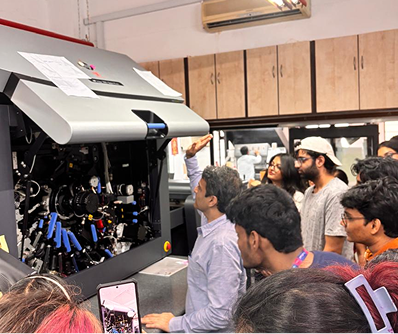
Repro House - For CD 3rd Year
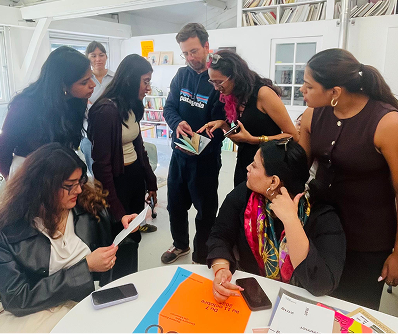
Organized for 3rd-year CD students, the Reproscan Printing Press visit offered hands-on exposure to publication design, printing, and finishing processes bridging theory and practice while deepening understanding of the printing industry.
Visit to Swades Village
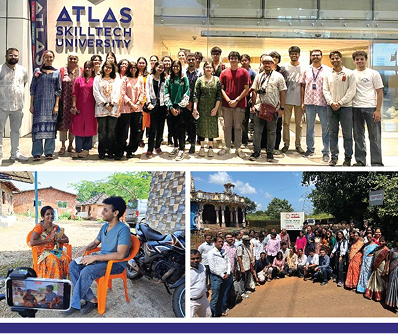
As part of the Design Research and Ethnographic Study course, Communication Design students from ATLAS SkillTech University collaborated with the Swades Foundation for a two-day immersion in Raigad villages, gaining firsthand insights into rural life, culture, and development initiatives.
Jaipur Immersion
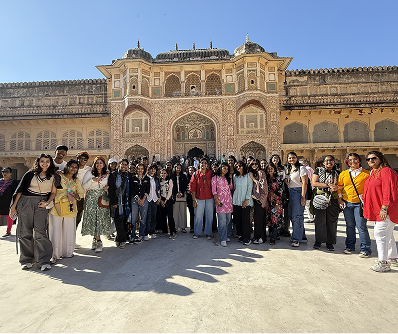
The objective was to take them through the cultural, art and monumental heriatge of Jaipur. We also attended Workshops -Block printing , hand painting, Meenakari, Puppet making (storytelling) Meenakari jewellery. Blue pottery, Lac bangle making, Phad paintings
Workshop on block making
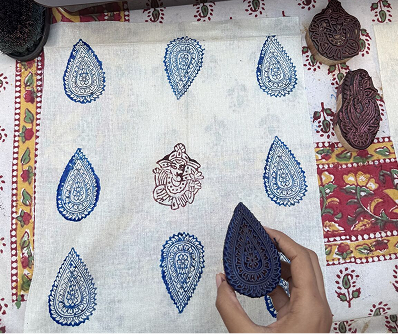
During their Jaipur trip, CD students explored the art of block printing, witnessing artisans carve intricate wooden blocks and trying the craft themselves, mixing colors, aligning patterns, and experiencing the joy of bringing designs to life.
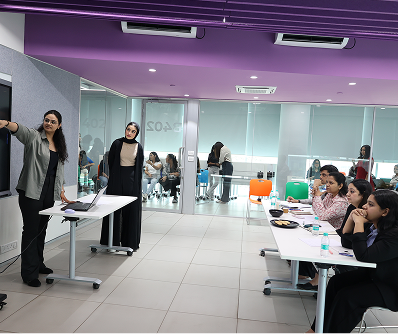
Portfolio Review with Tanu Sinha (Design head Pepsico India)
3rd and 4th year CD students showed their portfolio work to PepsiCo and South Asia, head designer Tanu Sinha. She loved the work and gave them good feedback to improve on them. She was all praise for their maturity, skills and confidence in presenting.
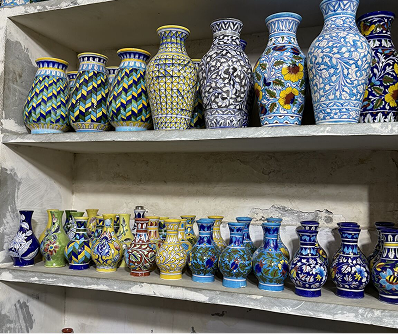
Blue pottery workshop at Jaipur
During their Jaipur visit, CD students met skilled Blue Pottery artisans, learning about the craft’s Persian origins, Jaipur’s role as its hub, and the intricate process from molding to glazing while also understanding the challenges artisans face in preserving this traditional art.
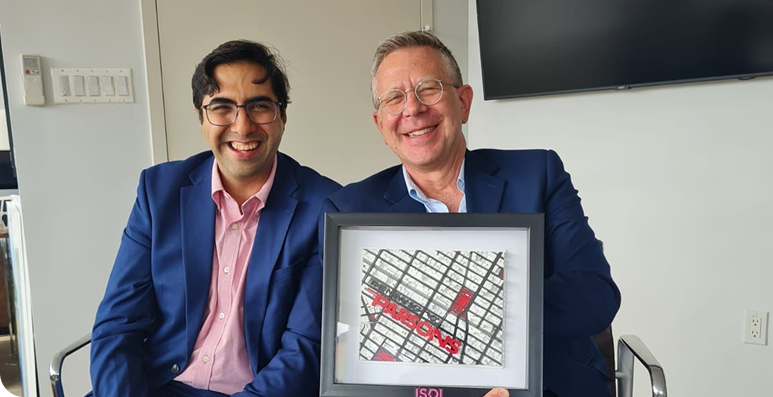
Portfolio presentation to international faculty Amanda from Parsons.
3rd year showcased their brand and semiotics work to Prof Amanda, Parsons The New School and received feedback. She loved their work and gave some very positive feedback.
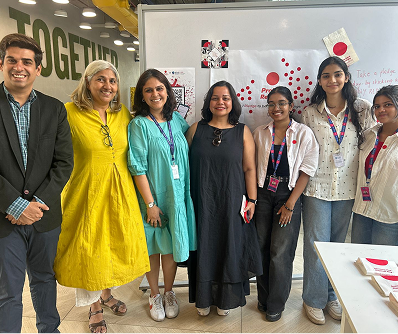
CD Students at WDCD
What Design Can Do (WDCD) is an international organisation that seeks to accelerate the transition to a sustainable, fair and just society using the power of design. Based in Amsterdam, with hubs in São Paulo, Mexico City, Delhi, Nairobi and Tokyo, WDCD started in 2011 and is initiated, curated and organised by creatives.
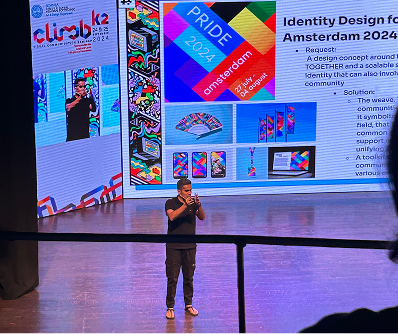
Climb K2 - 2 days
Organized by the Art & Design Department of Sophia Polytechnic, Climb K2 is a visual communication seminar that unites art students across Mumbai, featuring industry leaders who inspire through their creative journeys and showcase design’s transformative power.
Yutika Pandurkar - Branding
Rebranding Doy Kids Soap as a trusted, cruelty free, innovative brand for child skincare, combining its legacy offun and safety with modern advancements in natural and organic formulations.
Tanishka Shah - Print & Publication
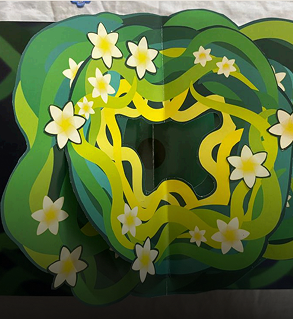
This project explores pop-up techniques in publication design, using folds, tabs, and 3D mechanisms to enhance reader engagement and create dynamic storytelling experiences.
Varshitha Injeti - Sustainable Packaging
Made from agar-based bioplastic, this flexible, translucent material combines agar, glycerine, and water with natural dyes like turmeric, chili, and beetroot, plus flower petals for decoration air-dried to create a sturdy, biodegradable sheet.
Mayuri Shewale - Biodegradable watch case
Created from groundnut shells. Often considered agricultural waste, groundnut shells have garnered attention for their potential applications across various industries due to their unique chemical composition and properties.
Maize leaf envelope
This innovative packaging for jewellery is made from naturally dried maize leaves. The leaves are removed and dried, then a coating is applied to keep the from leaves from drying out. They are woven together like a mat, and cut tinto shape. They retain stiffness and can be lined with cotton or paper, making a good alternative to bubble wrap envelopes.
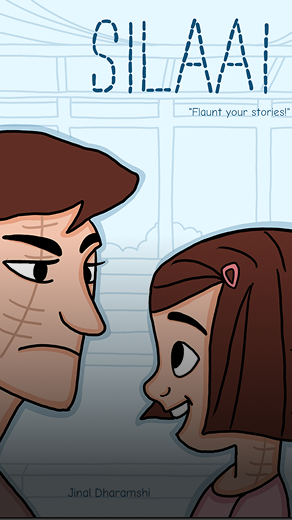
Visual narratives
The narrative, “Nostalgia Through the Senses,” follows Aisha as she returns home unannounced after months away. Each sensory cue sight, sound, touch, and smell evokes vivid memories, immersing her in moments from the past.
Siddhi Thakur - Consumer Psychology Tricks
The students were taught various psychology tricks that brands use to increase their revenue, gain more customers and make them loyal. The students then chose a brand of their choice and thoroughly studied the communication to identify the psychological tricks.
Sidharth Girish - Consumer Psychology Tricks
This jewellery packaging is crafted from naturally dried maize leaves, coated for durability, woven into mats, and cut to shape, offering a stiff, sustainable alternative to bubble wrap envelopes.
Janaki Pandit - Sustainable Packagaing - Cereals
This jewellery packaging is crafted from naturally dried maize leaves, coated for durability, woven into mats, and cut to shape, offering a stiff, sustainable alternative to bubble wrap envelopes.

Student Projects in Motion

Where creativity meets momentum

Student Voices: Real Voices from the Program
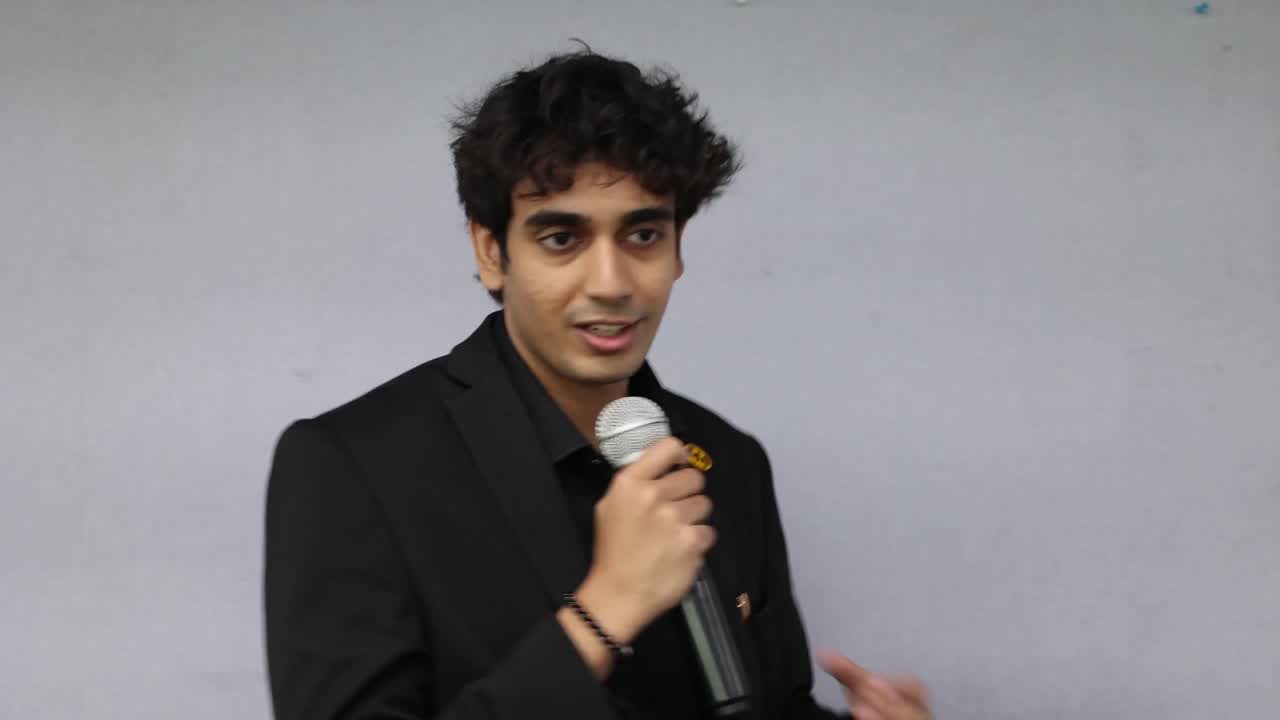
Hear from our students
I am loving the studio day and am enjoying watching what people are doing across teams
Janhavi Chaudhary
Class of 2023
We have learned so much about the industry. I am so happy to be practicing it now.
Arundhathy Varma
Class of 2025
I love our college, I am so proud of my college and excited for what’s next. I feel prepared thanks to everything my college has done for me.
Anushka Agrawal
Class of 2025
I’ve learned a lot at ISDI. I have had a great support system and thanks to that I have joined a company as a Lead Designer
Ishaan Moirangthem
Class of 2025

Ready to Build a Design Degree
that’s Built for the Real World?

More questions?
Let our AI Assistant answer your queries

Questions? We can read your mind

Yes, ATLAS ISDI School of Design & Innovation offers Communication Design as a specialisation under its 4-year B.Des program. The institute provides:

  • Career guidance and industry exposure
  • Support in portfolio development
  • Assistance in exploring internship and placement opportunities

The communication design curriculum taught at ATLAS ISDI School of Design & Innovation differs from other courses teaching communication design because our curriculum has been designed in collaboration with Parsons School of Design. It helps students with:

  • Visual communication and storytelling
  • Design fundamentals and digital media practices
  • Studio-based and project-led learning
  • Real-world problem-solving through design projects

To apply for Communication Design at ATLAS ISDI School of Design & Innovation, candidates must have:

  • A minimum of 50% in 10+2 (or equivalent) from a recognised board
  • A Design Portfolio or take the Design Aptitude Test
  • Personal Interview

Yes, students at ATLAS ISDI School of Design & Innovation may have opportunities to engage with industry professionals through:

  • Guest lectures and workshops
  • Project-based learning
  • Exposure to real-world design briefs

These interactions help students understand industry expectations and practices.

There are many career prospects one can consider after graduating from Communication Design. The diverse field opens doors to many opportunities, such as:

  • Graphic Designer
  • Content Designer
  • UI Designer
  • Social Media Strategist
  • Visual Designer
  • Digital Interaction Designer
  • Packaging Designer
  • System Engineer
  • Branding specialist
  • Brand & Way Find Designer

Yes, ISDI provides global exposure for its Communication Design Students. We have a curriculum which has been designed in collaboration with Parsons School of Design. The curriculum covers:

  • Global topics, which help students gain knowledge from a wide spectrum
  • It helps students work on challenges which are prevalent in the field
  • It allows students to understand in depth and apply the knowledge with live projects
  • The curriculum integrates disruptive design sense with experiential learning

Yes, the Communication Design program at ATLAS ISDI School of Design & Innovation benefits from collaboration with Parsons School of Design. This ensures:

  • Exposure to global design methodologies
  • Contemporary and relevant curriculum frameworks
  • A balance between conceptual and practical learning