































Fashion Design: Fashion Innovation &
Design Futures
Preparing leaders for a changing fashion industry.
Fashion Design: Fashion Innovation &
Design Futures
Preparing leaders for a changing fashion industry.
Fashion Design: Fashion Innovation &
Design Futures
Preparing leaders for a changing fashion industry.
Duration
4-Year Hons.
(Option to get degree after year 3)
Eligibility Criteria
50% in Class XII
(Any Stream) or equivalent IB / A-Levels
Next Intake
July 2026
Session begins from 15th July 2026
This program equips students to lead in a rapidly evolving fashion industry by blending creativity, sustainability, and emerging technologies. Students explore garment design, styling, fashion production, and digital innovation while experimenting with smart wearables, AI-driven forecasting, and Metaverse-ready fashion experiences. Hands-on studios, industry collaborations, and live projects build future-ready skills in entrepreneurship, brand strategy, and sustainable design practices. Graduates are prepared for careers as fashion entrepreneurs, consultants, costume designers, sustainable fashion specialists, digital fashion innovators, and AI-driven forecasters, emerging as creative leaders shaping the fashion industry of tomorrow.
Fashion Segments
Fashion Technical
Surface
Design
Fashion
Tech
Fashion Accessories
Fashion
Styling
Fashion Business
Fashion Sustainability
Fashion Entrepreneur & Brand Founder
Fashion Consultant & Image Strategist
Costume & Entertainment Fashion Designer
Fashion Production, Supply Chain & Merchandising Specialist
Sustainable & Circular Fashion Designer
Fashion Tech & Smart Wearables Designer
AI Fashion Forecaster & Data Analyst
Digital Fashion & Metaverse Designer
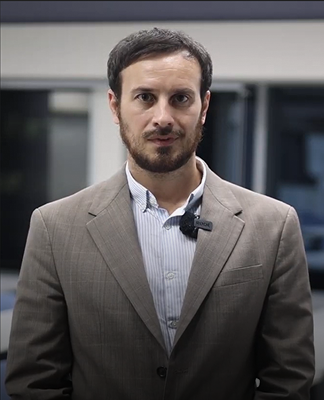
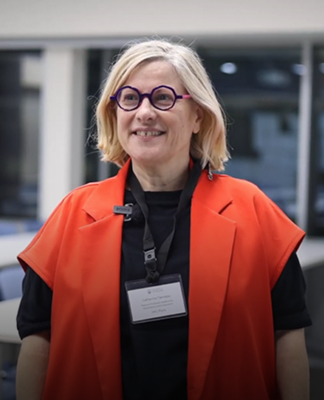
Program Director - Solange Suri
Divya
Jaitly
Anwar
Khan
Heena Sachdeva
Gaura Srivastava
Ishita
Kulkarni
Priti
Doshi
Sakshma
Shetty
Prachi
Garge
Karishma
Gupta
Rucha Suryavanshi
Harroop
Grang
Seema
Hiwrale
Prakshi
Jain
Namrata Momaya
Shivani
Saraf
Prunal
Khawani
Karan
Berry
Sulbha
Jagat
Shirali
Tyabji
Sonam
Parvani
Jaljit
Ajani
Gavin
Remedios
Harshal Shanwar
Ekta
Ghosh
Nikita
Sutar
Rashmi
Sathe
Divya Makhija
Stylist
Garima Grover
Fashion Designer
Vaibhavi Venkat
Founder
Disha Adhia
Merchandiser
Niyomi Shah
Fashion Designer

Our Globally Benchmarked Curriculum

Semester 1

Laying the foundation for creative thinking and design. Students explore core principles, visual language, and problem-solving skills that prepare them for future learning.
Design Research 1
Use design thinking and visual methods to explore, research, observe patterns, reflect on insights, and craft compelling stories that communicate ideas, inspire action, and create meaningful impact.
Design Studio 1
Design Studio 1 introduces creative exploration through design thinking, observation, research, and storytelling. Students develop problem-solving, visual communication, and reflective practice skills to address real-world challenges.
Drawing Fundamentals 1
Drawing Fundamentals 1 builds core visual skills through observation, sketching, composition, form and technical drawing. Students explore line, shape, proportion, and perspective to strengthen creative expression and design communication.
Imaging 1
Imaging 1 introduces digital and analog imaging techniques, exploring composition, light, and narrative. Students learn visual storytelling, image editing, and creative expression for design and communication.
Space and Materiality
Space and Materiality explores relationships between form, material, and environment. Students experiment with textures, structures, and spatial design to understand sensory impact, function, and creative possibilities.
History in Context to Objects
History in Context to Objects examines cultural, social, and historical influences on objects. Students analyze artifacts to understand design evolution, material significance, and contextual storytelling.
Skill-Up Elective
Skill-Up Elective offers specialized learning opportunities beyond the core curriculum, enabling students to explore emerging tools, creative practices, and interdisciplinary skills that enhance professional growth.
ATLAS Elective

Semester 2

Building confidence in experimentation and observation, students engage in hands-on projects that develop analytical thinking and creativity. The semester deepens design practice, emphasizing research, advanced techniques, sustainability, and user experience, fostering innovation, collaboration, and readiness for real-world challenges.
Design Research 2
Design Research 2 advances research skills, emphasizing observation, data analysis, and user insights. Students apply research backed by design thinking to identify problems, generate solutions, and inform creative strategies.
Design Studio 2
Design Studio 2 builds on creative practice, guiding students to apply research, experimentation, and design thinking in real-world projects, developing problem-solving, collaboration, and visual storytelling skills.
Drawing Fundamentals 2
Drawing Fundamentals 2 deepens observational and visual storytelling skills. Students refine visual communication and expressive techniques for creative design solutions.
Imaging 2
Imaging 2 advances digital and analog imaging techniques, focusing on composition, storytelling, and post-processing. Students create visually compelling narratives and enhance design communication through images.
Sustainable System
Sustainable System explores eco-friendly design principles, material choices, and systemic thinking. Students analyze environmental impact, interdependence of various systems using, and integrate responsible practices into design processes.
Time
Time examines its role as a design element, influencing memory, narrative, information flow, and user experience. Students explore temporal dynamics to create meaningful, engaging designs.
Skill-Up Elective
Skill-Up Elective offers specialized learning opportunities beyond the core curriculum, enabling students to explore emerging tools, creative practices, and interdisciplinary skills that enhance professional growth.
ATLAS Elective
Why our Year 1 outpaces every
other design school?
ISDI School of Design
Multidisciplinary Exposure
Offers a Major–Minor Pathway where students combine core specialization with a secondary focus called a minor.
Integrated Design Thinking
Combines design thinking, observation, and research fostering strategic and creative problem-solving.
Holistic, Future-Ready Learning
Includes forward-looking courses like Sustainable System and Time, focusing on environmental impact.
Other Design Schools
Holistic, Future-Ready Learning
Other design schools follow single-track, restricting students to one specialisation throughout the program.
Theory–Practice Gap
Often separates theory and practice, introducing research much later as an
after-thought.
Aesthetic-Centric Focus
Primarily emphasizes form and aesthetics, with limited focus on sustainability or systems thinking.

Semester 3

Explore garments, materials, and creative concepts. Apply foundational skills enhanced by digital design tools and emerging tech.
Fashion Design Studio 3: Creative Process
Introduces textile fundamentals, research methodologies, and collaborative practices, enabling students to develop innovative fashion design concepts through experimentation, creative exploration, and structured design processes.
Fashion Technical Studio 1
Builds essential garment-making skills, including pattern making, draping, and sewing techniques, allowing students to translate fashion concepts into accurately constructed, wearable designs.
Fashion Drawing Studio
Develops fashion illustration skills by emphasizing figure drawing, rendering, and personal style, enabling students to communicate design ideas visually with precision and creativity.
Introduction to Fashion History
Explores modern fashion history from couture to ready-to-wear, examining cultural, social, and economic influences on fashion evolution and contemporary design practices.
Textile History of India
Studies India’s rich textile heritage, historical trade routes, and foundational textile terminology, fostering an understanding of cultural context, traditional techniques, and design inspiration.
Form and Material Studies
Teaches accessory and product design through material experimentation, 3D form exploration, and innovative prototyping, encouraging tactile, aesthetic, and functional understanding of design objects.
Minor Track
The minor track you choose will continue across all the remaining years of your program.

Semester 4

Translate ideas into wearable designs. Strengthen construction, styling, and experimentation skills using tech-assisted techniques.
Fashion Technical Lab 2
Advances garment-making skills through hands-on making and exploration of technical concepts, enhancing technical proficiency, precision and creativity in executing creative fashion concepts.
Textile Print Design
Teaches innovative textile print techniques, enabling students to create visually appealing, market-relevant patterns and prints for fashion applications with practical experimentation and design thinking.
Fabric Formation Techniques
Explores fabric identification, construction methods, and structural properties through practical experimentation, fostering understanding of material behavior for informed fashion and textile design decisions.
Lifestyle Accessories
Designs functional and aesthetic lifestyle accessories, emphasizing form, construction techniques, and user-centered approaches to create innovative and wearable products.
Graphic Design Studio
Explores fabric formation techniques such as knitting, crochet and weaving through practical experimentation and direction of creative concepts to appropriate end uses.
Visual Arts
Explores key twentieth century art movements as a way to understanding the evolution and growth of visual arts and how artistic process can inform the creative process of the designer.
Textile Design (Study of Textile Culture)
Explores textile culture and heritage to understand the traditions and conventions practised in developing distinctive textile designs
Fashion & Lifestyle Design Headgear Design
Develops headgear design skills through concept generation, prototyping, and accessory-making techniques, balancing aesthetics, functionality, and cultural relevance in fashion projects.
Craft Documentation
Teaches systematic documentation of craft techniques, cultural practices, and design processes, producing professional records for research, preservation, and creative application in fashion design.
Fashion Semantics Studio: Visual Communication 1
Builds visual communication proficiency to express fashion identity and concepts through illustration, digital media, typography, and creative storytelling strategies.
Fashion Design Studio 4: Creative Process
Enhances creative exploration and design execution through hands-on fashion projects, studio practice, and iterative experimentation, fostering innovation and personal design expression.
Minor Track
Builds visual communication proficiency to express fashion identity and concepts through illustration, digital media and creative storytelling strategies.
Why our Year 2 outpaces every
other design
school?
ISDI School of Design
Creative Studio Immersion
Hands-on studios foster collaboration, experimentation, and innovation.
Material-Driven Learning
Labs blend making, testing, and real-world application.
Cultural & Visual Context
Courses link heritage and storytelling to design practice.
Other Design Schools
Limited Exploration
Focus on fixed briefs with minimal creative freedom.
Technique Over Innovation
Skills taught in isolation, little experimentation.
Disconnected Theory
Theory detached from real-world design context.

Semester 5

Develop larger collections integrating aesthetics, functionality, innovation, and digital/AI tools. Build iterative and critical thinking skills.

Fashion Design Studio 5
Explores the development of fashion design concepts in the context of society, culture and markets. Students develop a more comprehensive approach to design development backed by research.
Visual Communication Studio 2 - FD
Advances projects in Illustration, use of digital media, and storytelling equipping students with a range of storytelling devices.
Introduction to Fashion Studies
Exposes the students to different theoretical perspectives used to study fashion as a modern and global phenomenon.
Specialized Studio 1
Guides development of personalized fashion collections tailored to specific market needs, emphasizing concept development, design execution, and professional portfolio-quality outputs.
Minor Track
The minor track you choose will continue across all the remaining years of your program.
Program Elective

Semester 6

Push boundaries with advanced garment design, styling, and tech-enabled experimentation. Focus on sustainable and innovative solutions.
Fashion Design Studio 6
Advances design processes to include personal inspirations and individually developed techniques of ideation and design development incorporating a breadth of design visualization skills.
Research Methodology
Teaches structured research methods using visual, narrative, and analytical tools, supporting critical design thinking and evidence-based decision-making for impactful fashion and lifestyle design projects.
Fashion design (Crafts and Textiles After 1970)
Develops sustainable fashion practices aligned with brand identity, emphasizing post-1970 textile and craft e volution through industry collaborations and practical design experimentation.
Fashion & Lifestyle Design (Jewelry)
Explores experimental jewelry design by integrating traditional craft techniques, textiles, and innovative materials, producing wearable, culturally informed, and visually striking fashion accessories.
Industry Live Project
Provides immersive, hands-on experience in fashion retail, merchandising, and product design enabling students to apply theoretical knowledge to real-world industry challenges.
Fashion Retail Dynamics
Examines how fashion concepts are brought to the path of consumption in the highly dynamic and competitive fashion retail industry.
Traditional Textile Crafts of India
Examines India’s rich textile traditions, their cultural heritage, craftsmanship, and community relevance, fostering awareness of sustainable practices and design inspiration from historical techniques.
Specialized Studio 2
Applies user-centered design principles to develop practical fashion solutions, emphasizing industrial relevance, functionality, and professional execution for market-ready apparel and lifestyle products.
Digital Fashion
Explores human-centered digital innovation in fashion design, combining technology, creativity, and visualization tools to produce interactive, forward-thinking, and experiential digital fashion solutions.
Minor Track
The minor track you choose will continue across all the remaining years of your program.
Why our Year 3 outpaces every
other design
school?
ISDI School of Design
Industry-Connected Studios
Live projects and specialized studios bridge classroom learning with real-world fashion markets.
Technology & Innovation Focus
Courses like Digital Fashion and Fashion Innovation integrate emerging tools and tech-driven creativity.
Cultural & Sustainable Perspective
Blend of traditional textile heritage and modern sustainability practices.
Other Design Schools
Limited Industry Exposure
Projects often remain academic with minimal professional engagement.
Traditional Methods
Conventional craft focus with slow adaptation to digital trends.
Global Over Local
Less emphasis on regional crafts and sustainable design thinking.

Semester 7

Engage in live projects, shows, and collaborations. Develop professional skills, presentation, and tech-enhanced industry readiness.
Design Resolution Studio
Develops advanced technical design and prototyping skills, guiding students to create a cohesive three-look fashion collection that demonstrates creativity, craftsmanship, and market awareness.
Professional Practice and Ethics
Builds a strong professional identity through business communication, networking, ethical practices, and confident presentation skills, preparing students for successful careers in the fashion industry.
Fashion Design Innovation Studio 7
Encourages personal expression and innovation by guiding students in developing fashion collections that reflect individual identity, creativity, and forward-thinking design approaches.
Fabric Styling Lab
Explores fabric properties, draping, and styling techniques to support creative fashion collection development, emphasizing material experimentation and aesthetic refinement for innovative design outcomes.
Minor Track
The minor track you choose will continue across all the remaining years of your program.

Semester 8

Present a final product portfolio demonstrating innovation, creativity, and readiness to lead in a tech-enabled industry.
Thesis Research and Writing
Advances creative signatures developed in earlier stages of the progarm towards innovative design strategies and documents the development through practice-based thesis research and writing.
Fashion Styling Studio
Explores creative approaches to presentation of fashion concepts through effective styling and visual communication strategies.
Design Thesis Technical Lab
Supports the development of innovative and market-ready products as part of students' final year thesis through strategic collaborations with artisans and/ or manufacturers.
Minor Track
The minor track you choose will continue across all the remaining years of your program.
Program Elective
Why our Year 4 outpaces every
other design
school?
ISDI School of Design
Industry-Ready Thesis Projects
Combines research, making, and real-world collaborations.
Creative Identity
Encourages personal style and innovation.
Career-Focused Learning
Prepares students for fashion business and branding.
Other Design Schools
Academic-Only Theses
Graduation projects often remain conceptual with limited industry engagement.
Uniform Outcomes
Emphasis on standard techniques.
Limited Market Exposure
Minimal focus on professional practice.
01
Submit the Application Form
Apply for Jul’ 26 Cohort
02
Creative Aptitude Test
03
Portfolio Review + Interview
04
Final Selection & Offer Letter
Eligibility
Indian Boards (ISC / CBSE / State Boards)
  • Minimum 50% overall in Class XII
A-Levels (UK)
  • Minimum grades A, B, or C in any 2 subjects
  • Total of 3 subjects required
International Baccalaureate (IB)
A minimum of 24 points, including:
  • 3 Higher Level (HL) subjects
  • 3 Standard Level (SL) subjects
Why Fashion Design: Fashion Innovation
& Design Futures at ISDI x Parsons
Design That’s
Rooted in Reality
Create for real people, real brands, and real-world contexts, from streetwear to couture to fashion activism.
Global DNA,
Local Insight
Study a curriculum shaped by Parsons and adapted for today’s fashion landscape in India and beyond.
The Studio is Just
the Beginning
Learn in fashion labs, makerspaces, and digital studios, but also in ateliers, stores, runways, and cities.
Taught by Designers Who
Work, Not Just Teach
From luxury houses to indie labels, our faculty bring insider perspective and mentorship to every studio.
Build Your Label Before
You Graduate
Whether you launch your own brand or work with one, you’ll be ready, with a portfolio that opens doors.

Where concepts meet execution,
in and beyond the classroom.

At ISDI, every project becomes part of a career-ready portfolio. From hands-on labs and design sprints to brand collaborations, internships, hackathons, and industry showcases, you graduate with real-world experience and work that speaks for itself.
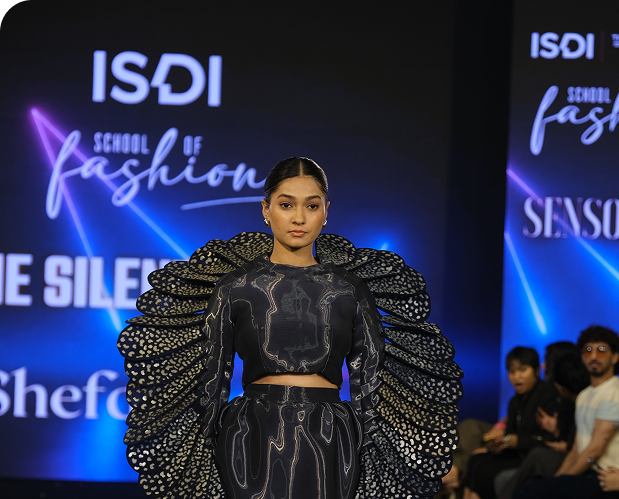
Sensorium-Graduate
Fashion Show
The AJIO Luxe Weekend offered students firsthand exposure to the luxury fashion industry, with 32 ISDI interns managing brand stalls and creating real-time social media content. They honed skills in engagement, marketing, and branding while networking with professionals, and earning strong mentorship feedback.
Paris Fashion Week:
Graduate Runway
Five of our senior year students showcased their work on The Graduate Runway, Paris Fashion Week in March 2025. The students are: Radha Khot, Rahet Chhabra, Khushi Pawan Mahajan, Vedah Jindal and Tanisha Shetty.
International Fashion Week internships
Our students intern at global fashion weeks like Paris, London, and Tokyo, gaining firsthand exposure to international designers, backstage operations, and fashion PR—immersing themselves in the world’s leading fashion capitals.
Press Coverage (Lokmat Times)
Senior Year student, Radha Khot was featured in Chhatrapati Sambhajinagar's Lokmat Times for her participation in the Graduate Runway, Paris Fashion Week.
The Vanilla Issue
Class of 2024 alumna, Khushi Mistry, was featured on The Vanilla Issue, an Instagram Page dedicated to showcasing the work of emerging designers from all over the world.
Industry Exposure (Weavers' Service Centre)
Students do workshops at the Weavers' Service Centre in weaving and Block printing as part of their Fabric Formation Techniques and Textile Print Design Electives
Industry Exposure (Woolmark Seminar)
Students get the opportunity to attend industry seminars like the Woolmark Seminar, with Mumbai being the hub of all business and industrial activity.
Local Immersions (Indore)
Students go to different regions of India and immerse themselves in local culture, craft and industry.
Industry Experts
We've had industry experts like Ganesh Subrmanian (Co-founder, Stylumia), Akshay Tholia (Textile Expert) and Anubhuti Sharma (Stylist) do masterclasses at teh University.
International Faculty: Portfolio Reviews
Senior year students got an opportunity to show their portfolios to Prof Jeongki Lim, Dean of the School of Design Strategies, Parsons The New School
International Guest Speakers
Students got the opportunity to attend a workshop on geometric cutting with Mexican Fashion Designer, Carla Fernandez
International Guest Speakers
Students conduct podcasts with industry guests, learning the art of interviewing and interacting with stalwarts from the industry. Here is an image of third year students doing a podcast with Mr Ganesh Subramanian, co-founder of Stylumia.
Manasi Parmar - Linked With Love
This thesis explores how unconventional materials and structural forms can merge to create designs that are both visually striking and functionally innovative, redefining the boundaries of materiality and form.
Meghana Bavaskar - Padmé
The Padmé collection explores the balance between masculine and feminine energies, using fashion to express self-discovery, contrast, and contemporary social dynamics.
Reetika Jha - Gaia (Fashion Film)
To lead a cinematic revolution that elevates the collective consciousness of humanity, inspiring profound intellectual and spiritual growth through the power of immersive storytelling and captivating visuals, all while ensuring an enjoyable and entertaining experience for every viewer.
Rishtika Satyarthi - Rahasamya Jadein (Mystical Roots)
This collection explores the intentional fusion of Bharatanatyam, our cultural roots, mathematics, and science. This premium ready-to-wear collection, characterized by its all-white aesthetic, unveils the intricate connections among these elements.
Sahithi Chithumala - All About The Eye
'All About the Eye' seeks to unravel the layers of wearability by looking at clothing through a different lens, celebrating the art of space, emphasizing not only the physical materials, but also the harmonious interplay between them.
Sahithi Chithumala - All About The Eye
'All About the Eye' seeks to unravel the layers of wearability by looking at clothing through a different lens, celebrating the art of space, emphasizing not only the physical materials, but also the harmonious interplay between them.
Anjal Oberoi - AO
The aim of this thesis project was to think through the process of building a brand that revolves around the troika of Play. Create. Discover.
Simran Khabrani - Senna: An Artisanal Streetwear brand
Senna reimagines conventional materials and design principles to create bold, boundary-defying pieces that challenge norms and offer a distinctive, edgy aesthetic.
Tamanna Mittal - Khatt
The collection is inspired by the ideal of comfortable luxury achieved through an exploration of vibrant colours, rich textures, and captivating silhouettes inspired by the surrounding world. These designs evolved into a celebration of women-centric themes, with a keen focus on empowering women.

Student Projects in Motion

Where creativity meets momentum

Student Voices: Real Voices from the Program

Hear from our students
We have learned so much about the industry. I am so happy to be practicing it now.
Karishma Rathod
Class of 2025
I love our college, I am so proud of my college and excited for what’s next. I feel prepared thanks to everything my college has done for me.
Miloni Shah
Class of 2025
I’ve learned a lot at ISDI. I have had a great support system and thanks to that I have joined a company as a Lead Designer
Diza Damania
Class of 2025

Ready to Build a Design Degree
that’s Built for the Real World?

More questions?
Let our AI Assistant answer your queries

Questions? We can read your mind

ISDI provides B. Des to its students in various subjects. The undergraduate B. Des programme is a four-year course that enables students to enhance their focus on strategic thinking, design, and innovation. 

The undergraduate B. Des program offers 7 programs in various design subjects, such as:

  • Communication Design

  • Fashion Design

  • Fashion Communication & Styling

  • Interior Design

  • Product Design

  • Strategic Design Management

  • Animation & VFX

The postgraduate programme focuses on entrepreneurial and design thinking skills.

ISDI is a well-known institution for many reasons. Its exclusive collaboration with Parsons School of Design stems from its position as a renowned institution. The key factors setting ISDI apart are:

  • Location: It is in the heart of Mumbai and surrounded by the best design organisations.

  • Industry-focused approach: With industry stalwarts and meteors guiding students, individuals not only learn from practical knowledge but also learn from experience.

  • Networking: Students can work and interact with professionals in other fields, strengthening their networking skills. 
  • Global curriculum: The curriculum has been meticulously designed to prepare students for national and international work opportunities.

Experiential learning: ISDI believes in going beyond traditional learning, and utilises advanced technology to nurture creativity among students.

Yes, ISDI offers guest lectures and masterclasses as a part of the curriculum. International voices and mentors lead classes with its exclusive partnership with Parsons School of Design (Parsons faculty often visits ISDI and students learn from them here in India). Integrating a masterclass allows students to expand their cultural understanding, too. We introduce students to a variety of workshops and masterclasses that help expand their interests and solidify their vision.

ISDI hosted  Parsons Week 2025, in partnership with ISDI,  from March 23-28, 2025, featuring a week of design-focused events and sessions led by faculty from the renowned Parsons School of Design. During their visit to ISDI, they offered masterclasses and portfolio review sessions as well.

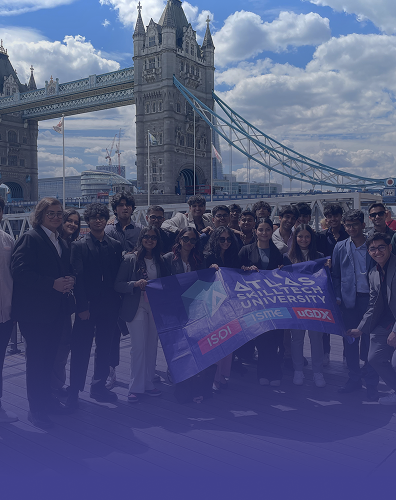
Yes. ISDI offers global opportunities, too. Students get opportunity to study overseas, during immersive excursion one such example is Paris where students visited colleges such as

  • Students can study in Paris and participate in industry visits and workshops. 

  • Partnership with Parsons School of Design ensures that thinking strategies, global tools, and methodologies are a part of the curriculum.

ISDI stands out from other design schools through its partnership with Parsons School of Design. Its urban-rich culture setting ensures students learn thoroughly. ISDI stands out from other design schools due to its unique features:

  • A rich curriculum benefits from its collaboration with Parsons School of Design.

  • Real-world internships and masterclasses

  • Diverse networking

  • Strategic thinking nurtured by industry experts

Yes, the curriculum is developed in collaboration with Parsons School of Design. The B Des curriculum is meticulously designed to allow students to benefit from it. The global curriculum expands their horizon of understanding and ensures they are able to face challenges and secure lucrative opportunities.

The ISDI - School of Design & Innovation has received curriculum development support from Parsons School of Design since its establishment in 2013.

This unique partnership for curricular excellence ensures ISDI students have access to a global contemporaneity curriculum and proven teaching and learning methods enabling our students to be the design leaders of the future.

ISDI has designed its curriculum in collaboration with Parsons School of Design. The curriculum ensures academic excellence and alignment with industry by:

  • Design professionals design curriculum.

  • Professionals hold masterclasses for students to learn from experience.

  • Students are encouraged to take up projects which challenge them to face real-life design challenges.

  • Working on projects with industry-leading companies

  • Regular workshops held by industry professionals

ISDI integrates industry into its curriculum in several ways. We aim to blend classroom learning with real-world experience. The industry learnings are integrated through:

  • Masterclasses with experts

  • Industry-led collaborations and projects

  • Hackathon for understanding real-life disciplines

  • Visits to different design studios for better learning

Yes, ATLAS ISDI organises live projects with brands as part of its curriculum. The thoughtfully curated curriculum is in collaboration with Parsons School of Design. The curriculum includes internships with top brands. This internship nurtures

  • Applying theoretical knowledge to real-life problems

  • Strengthen problem-solving skills

  • Build a strong portfolio

  • Learn from the experience of senior citizens.

  • Guided by industry experts

ISDI has always aimed to create a safe and immersive campus as well as a learning experience for its students. With a thoughtful curriculum in collaboration with the renowned Parsons School of Design, every design module for specialisation is distinct and focuses on strengthening the design principles. The student experience at ATLAS ISDI includes:

  • Students get to participate in various competitions, which channel their design creativity.

  • Students are made to participate in various workshops.

  • Students have to work on several projects and increase their networking and communication skills.

  • Students participate in various college festivals and experience personal growth through faculty-led discussions and talks

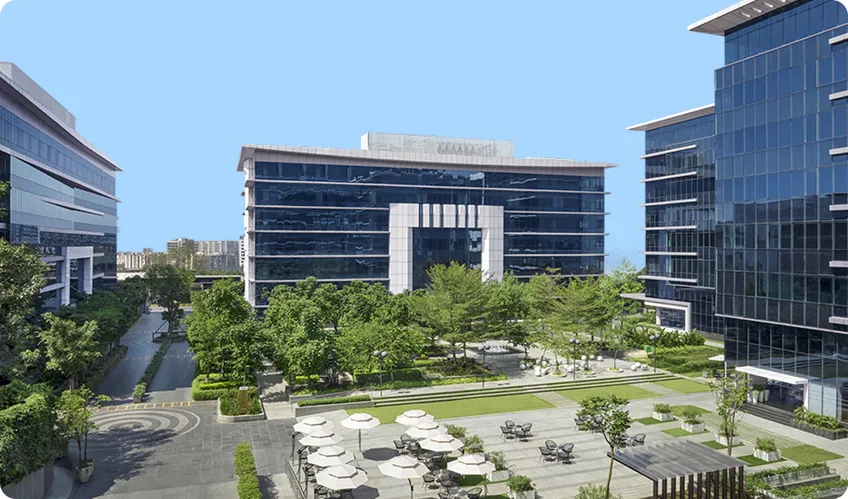
ISDI has an exclusive campus. Renowned for its infrastructure and thoroughly curated curriculum, the institution allows students to widen their area of learning. With our recent NAAC A Grade certification, our campus provides its students with:

  • The campus features large laboratories, designer studios, fashion technology zones, and various other spaces where students can explore and showcase their creativity.

  • Immersive workshops for strengthening design principles, along with frequent visits to design studios, inspire the students.

  • Students can learn from experts through frequent immersive workshops held in design studios.

  • Design Studios

  • Fashion Lab

  • Product Lab (Workshop)

  • Fashion Studio

  • Digital + UX Labs

  • Maker Spaces

ISDI offers its students a variety of events for them to participate in and cherish their campus life. From flagship events to cultural events, ATLAS ISDI is always thriving throughout the year. Extracurricular activities offered by ATLAS ISDI are:

  • Design Events

  • Startup-Streets

  • Industry Masterclasses, Workshops, RTCs

  • Master’s Admissions Events

  • Placement & Career Events

  • Fests & Cultural Showcase

  • Hackathons & Challenges

  • Podcasts & Fireside Chats etc.

These interactions boost engagement by allowing students to display projects, share ideas, and connect with visitors.

Yes, ISDI requires an entrance exam for design programmes. The admission process has been designed to gauge the design skills and communication skills of the students. The ISDI admission entrance exam consists of:

  • Portfolio upload or design project holding a 40% weightage

  • The online aptitude test holds a substantial weightage of 40%.

  • Along with tests, there is a round of private interviews as well, which test the students' reasoning and analytical skills.

The process to apply for ISDI’s B.Des program is extremely simple. ISDI focuses on inclusivity, and our admissions process has been designed for individuals to seek their desired design specialisation. The admission process follows these steps:

  • Submitting the portfolio

  • Those students who do not have a portfolio can also complete a design project listed by ATLAS ISDI.

  • Along with submitting a portfolio and/or design project, there is an aptitude test which gauges the student’s communication skills.

  • The last test is the private interview test. This test allows our panel to understand the ambitions and goals of the students.

ISDI is among the renowned institutions for the B. Des Program. The eligibility criteria for ISDI are:

Students currently studying in Grade 12 and appearing for their 10+2 board exams are eligible to apply. This includes boards like:

  1. CBSE

  2. ICSE

  3. HSC (Maharashtra)

  4. IGCSE A-Levels

  5. The IB Diploma Program (IBDP) 

  6. Any recognised national or international equivalent.

At ISDI, there is no stream restriction; students from Arts, Commerce, or Science backgrounds are welcome. What matters most is your interest in design, creativity, and innovation. So if you are a science student with a profound interest in design and art, you can give wings to your dreams here at ISDI.

Yes, students are required to submit their design portfolio. Students can:

  • Upload their portfolio while working on their IDSI Challenge

  • The portfolio should contain eight to ten pieces of your best work that proficiently display your design skills. 

  • These pieces can be animated, painted, or sketched according to the student's preference.

Those students who do not have a portfolio can simply:

  • Complete the ISDI Design Project

  • Create a visual work inspired by any ONE of the given themes: One World | Tracing Nature | Translating Tomorrow

  • All forms of design are acceptable, including drawing, video, photography, sculpture, 3D work, collage, and digital images. 

  • Support your project by writing a 500-word essay describing how you developed your ideas.

A. Yes, students who are not in a design program can also apply to study ISDI. We have always believed in inclusivity, and our dynamic selection process ensures that students from diverse backgrounds, including those without a design background, can apply.

Career opportunities after graduating from ISDI are innumerable. Graduates can work as:

  • Art Director

  • Brand Manager

  • Digital Transformation Analyst

  • E?commerce Brand Strategist

  • Design Consultant

  • UX Research Analyst

  • Strategy Consultant

  • Fashion Designer

ISDI has always believed in supporting students beyond their campus as well. Our committee works diligently to help students secure their desired jobs. ISDI assists students in building a strong portfolio by providing:

  • Hands-on experience working in a state-of-the-art lab with cutting-edge design tools.

  • A curriculum that emphasises experiential learning and interdisciplinary approaches will introduce projects that enable students to learn and overcome the challenges they regularly face in their field of study.

  • Our guidance and placement committee provides comprehensive support to help students secure the right internship and lucrative opportunities.

A. ISDI helps the students in building a portfolio and guiding them through job placements as well. We help students by:

  • Having projects which enhance their portfolio

  • Guest lectures and masterclasses

  • SOPs

  • Projects which are a compulsory part of modules

  • Documentation of the project as a part of the portfolio

ISDI always ensures a promising future for its students. Our committee oversees every student's secure internships with top organisations that match their specialisations and career goals. 

  • Interns can work with renowned companies.

  • Work for esteemed designers

  • Gain hands-on experience with live projects and internships

  • Committees are made to make job hunting easy.

ISDI has an astounding record for placements. ATLAS ISDI has a placement committee which works dedicatedly for every student to ensure their placements. The committee guides the students to reach out to a job where their expertise can shine. The curriculum allows students to gain skills, which are:

  • Work for alumni organisations.

  • Work on certifications, which strengthen their credibility.

  • They should maintain an attractive portfolio that aids in securing better placements.

Yes, ATLAS ISDI supports entrepreneurship. The thoughtfully curated module, in collaboration with Parsons School of Design, is designed for students to learn about the principles as well as the dynamics of business. The curriculum is mostly aimed at:

  • The curriculum aims to integrate management with technology and emerging design principles in order to enhance students' skills.

  • Students are encouraged to join the evolving design ecosystem and become innovative designers or entrepreneurs.

  • The global immersion curriculum helps students understand the complexities of the business field, which arise in the design landscape.

Yes, ISDI graduates who have completed their design programme can effortlessly open their own ventures. This can be easily achieved because:

  • ISDI curates a curriculum that includes modules on entrepreneurial leadership. The modules encourage a business mindset with innovation and design in the lead. 

  • The learning environment at ISDI is nurtured by a mentorship ecosystem where industry stalwarts lead masterclasses for students.

  • Students gain comprehensive knowledge about innovation, entrepreneurship, and practical challenges.

  • Graduates graduate with a mindset that combines design and entrepreneurship skills, which are crucial for their venture.