

































Animation & VFX: Digital Animation
& Visual Effects
Training creators for global animation and entertainment industries.
Animation & VFX: Digital Animation
& Visual Effects
Training creators for global animation and entertainment industries.
Animation & VFX: Digital Animation
& Visual Effects
Training creators for global animation and entertainment industries.
Duration
4-Year Hons.
(Option to get degree after year 3)
Eligibility Criteria
50% in Class XII
(Any Stream) or equivalent IB / A-Levels
Next Intake
July 2026
Session begins from 15th July 2026
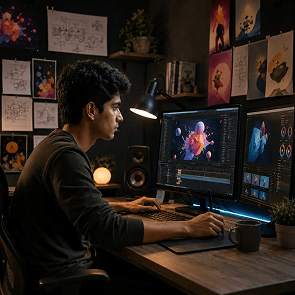
This program empowers students to create stunning digital animation and visual effects for entertainment, gaming, and immersive media. Students explore character design, 3D modeling, AR/VR environments, VFX, and procedural animation using AI and advanced software tools. Hands-on projects, industry collaborations, and live experiences develop technical expertise, storytelling, and creative problem-solving. Graduates are prepared for careers as character animators, 3D asset designers, VFX specialists, game animators, XR/mixed reality creators, and AI-assisted animation designers, emerging as future-ready professionals shaping the global animation and entertainment industries.
Traditional animation
Stop motion techniques
Creative technologies
Emphasis on Storytelling
Immersive Media
Animation Pipeline
Digital and craft skills
Character & AR/VR Animator
3D Modeller & Asset Designer
Game & Interactive Environment Animator
VFX & Compositing Specialist
AI & Procedural Animation Designer
XR / Mixed Reality Animator
Riddhesh Adarkar
Indraneel
Shelar
Agnijit
Tarafdar
Rushikesh
Mon Pal
Omkar Mahashabde
Jayesh
Panchal
Jay
Mehta
Rajendra
Ravi
Rao
Arpita Chikodikar
Shantanu
Mishra
Bhadar Rangani
Junior Designer
Geetika Sukhani
Interior Designer
Esha Shenoy
Inclusive Designer
Purvi Patni
Interior Designer
Smruti Patel
Materials Librarian
Alefiya Lakdawala
Interior Designer

Our Globally Benchmarked Curriculum

Semester 1

Laying the foundation for creative thinking and design. Students explore core principles, visual language, and problem-solving skills that prepare them for future learning.
Design Research 1
Use design thinking and visual methods to explore, research, observe patterns, reflect on insights, and craft compelling stories that communicate ideas, inspire action, and create meaningful impact.
Design Studio 1
Design Studio 1 introduces creative exploration through design thinking, observation, research, and storytelling. Students develop problem-solving, visual communication, and reflective practice skills to address real-world challenges.
Drawing Fundamentals 1
Drawing Fundamentals 1 builds core visual skills through observation, sketching, composition, form and technical drawing. Students explore line, shape, proportion, and perspective to strengthen creative expression and design communication.
Imaging 1
Imaging 1 introduces digital and analog imaging techniques, exploring composition, light, and narrative. Students learn visual storytelling, image editing, and creative expression for design and communication.
Space and Materiality
Space and Materiality explores relationships between form, material, and environment. Students experiment with textures, structures, and spatial design to understand sensory impact, function, and creative possibilities.
History in Context to Objects
History in Context to Objects examines cultural, social, and historical influences on objects. Students analyze artifacts to understand design evolution, material significance, and contextual storytelling.
Skill-Up Elective
Skill-Up Elective offers specialized learning opportunities beyond the core curriculum, enabling students to explore emerging tools, creative practices, and interdisciplinary skills that enhance professional growth.
ATLAS Elective

Semester 2

Building confidence in experimentation and observation, students engage in hands-on projects that develop analytical thinking and creativity. The semester deepens design practice, emphasizing research, advanced techniques, sustainability, and user experience, fostering innovation, collaboration, and readiness for real-world challenges.
Design Research 2
Design Research 2 advances research skills, emphasizing observation, data analysis, and user insights. Students apply research backed by design thinking to identify problems, generate solutions, and inform creative strategies.
Design Studio 2
Design Studio 2 builds on creative practice, guiding students to apply research, experimentation, and design thinking in real-world projects, developing problem-solving, collaboration, and visual storytelling skills.
Drawing Fundamentals 2
Drawing Fundamentals 2 deepens observational and visual storytelling skills. Students refine visual communication and expressive techniques for creative design solutions.

Imaging 2
Imaging 2 advances digital and analog imaging techniques, focusing on composition, storytelling, and post-processing. Students create visually compelling narratives and enhance design communication through images.
Sustainable System
Sustainable System explores eco-friendly design principles, material choices, and systemic thinking. Students analyze environmental impact, interdependence of various systems using, and integrate responsible practices into design processes.
Time
Time examines its role as a design element, influencing memory, narrative, information flow, and user experience. Students explore temporal dynamics to create meaningful, engaging designs.
Skill-Up Elective
Skill-Up Elective offers specialized learning opportunities beyond the core curriculum, enabling students to explore emerging tools, creative practices, and interdisciplinary skills that enhance professional growth.
ATLAS Elective
Why our Year 1 outpaces every
other design school?
ISDI School of Design
Multidisciplinary Exposure
Offers a Major–Minor Pathway where students combine core specialization with a secondary focus called a minor.
Integrated Design Thinking
Combines design thinking, observation, and research fostering strategic and creative problem-solving.
Holistic, Future-Ready Learning
Includes forward-looking courses like Sustainable System and Time, focusing on environmental impact.
Other Design Schools
Holistic, Future-Ready Learning
Other design schools follow single-track, restricting students to one specialisation throughout the program.
Theory–Practice Gap
Often separates theory and practice, introducing research much later as an
after-thought.
Aesthetic-Centric Focus
Primarily emphasizes form and aesthetics, with limited focus on sustainability or systems thinking.

Semester 3

Explore animation, storytelling, and visual expression. Apply concepts using digital tools, software, and emerging technologies.
Animation Film Studies
Explores animation’s narrative, social, and political dimensions, enabling students to critically analyze film and media for informed creative storytelling.
Introduction to Animation
Teaches illustration, storyboarding, and character design techniques, guiding students to plan and structure compelling animation narratives effectively.
Drawing for Animation
Develops foundational drawing and sculpting skills, enhancing students’ ability to create detailed, expressive, and production-ready animation assets.
Story and Narratives
Builds skills in screenwriting, character arcs, and visual composition, allowing students to craft coherent and captivating animation narratives.
Minor Track
The minor track you choose will continue across all the remaining years of your program.

Semester 4

Translate ideas into tangible interiors. Projects strengthen technical skills, creativity, and incorporate digital tools for design visualization.
Advanced Animation
An extension of Introduction to Animation, this course explores advanced principles of motion, character performance, and storytelling. Students refine their technical and creative skills to produce expressive, high-quality animations across digital platforms.
3D Sculpting
This course teaches digital sculpting techniques to create detailed 3D forms using industry tools, focusing on form, anatomy, and surface detail for animation and visualization.
Visual Development
Develops expressive characters through design, psychology, and storytelling exercises, enabling students to create compelling, relatable personalities for animation.
Storyboard and Animatics
Builds storytelling skills by guiding students through storyboard composition and animatic development, planning narrative flow a visual pacing effectively.
Modeling Studio
Teaches Maya 3D modeling for creating animation-ready characters and environments, emphasizing accuracy, topology, and production-ready asset creation.
Surfacing
Develops surfacing skills using digital tools, enabling students to texture characters and environments with realism and artistic expression.
Minor Track
The minor track you choose will continue across all the remaining years of your program.
Why our Year 2 outpaces every
other design
school?
ISDI School of Design
Story-Centric Learning
Emphasizes narrative building, character psychology, and visual storytelling to create emotionally engaging animations.
Comprehensive Production Training
Covers every stage of animation—from drawing and storyboarding to 3D modeling
Industry & Research Integration
Combines film studies, critical analysis, and real-world exposure to develop industry-ready storytellers.
Other Design Schools
Technique-Focused
Center largely on software and execution with limited storytelling emphasis.
Fragmented Skill Development
Teach separate animation stages without connecting conceptual and production aspects.
Minimal Contextual Learning
Often overlook research, film theory, and cultural understanding in creative practice.

Semester 5

Integrate animation, VFX, and immersive media in larger projects. Build experimentation and innovation skills using emerging technologies.
3D Animation and Rigging
Builds skills in rigging and procedural animation, enabling dynamic, realistic movement for 3D characters and objects in animation and VFX projects.
Concept art
Develops immersive 3D environments using concept art and narrative-driven design, creating visually compelling and contextually rich spaces for animation and VFX.
Surfacing 2
Builds students’ 3D mEnhances surfacing skills, applying complex shaders and detailed textures to characters and environments for realistic, production-ready animation and visual effects.odeling skills using Rhino and Keyshot software, enhancing their ability to visualize, refine, and integrate complex design concepts with realistic renderings.
3D Lighting
Teaches lighting and texturing techniques to enhance realism, mood, and atmosphere in 3D scenes for animation and VFX.
Minor Track
The minor track you choose will continue across all the remaining years of your program.

Semester 6

Push creative and technical boundaries with complex projects. Develop future-ready skills in immersive storytelling and AI-assisted production.
Character Animation
Develops expressive character animation by combining acting techniques and psychological understanding, enabling students to create believable, emotionally engaging, and nuanced animated performances.
Collaborative Project
Builds teamwork and collaboration skills through cross-disciplinary project development, preparing students for professional studio environments.
Production management
Introduction to the Complete pipeline of Animation film making process. - divided into 2D and 3D animation - where students get mentors to help them execute the project from 2D and 3D domain.
Immersive Storytelling - Unreal Engine
Teaches creation of interactive VR experiences, emphasizing storytelling, user engagement, and optimized asset development for immersive environments.
VFX Production
Teaches creation of interactive VR experiences, emphasizing storytelling, user engagement, and optimized asset development foGuides students through complete VFX workflows, teaching professional tools, techniques, and project management for high-quality visual effects productionr immersive environments.
Minor Track
The minor track you choose will continue across all the remaining years of your program.
Why our Year 3 outpaces every
other design
school?
ISDI School of Design
Advanced Production Mastery
Covers the full 3D and VFX pipeline with hands-on studio collaboration.
Expressive Storytelling
Merges character acting, psychology, and concept art for immersive worlds.
Future-Ready Technology
Integrates VR, Unreal Engine, and real-time workflows for innovative storytelling.
Other Design Schools
Tool-Focused Learning
Emphasize software skills without interdisciplinary depth.
Limited Character Development
Prioritize motion over emotional storytelling.
Outdated Techniques
Lack exposure to new technologies and immersive media.

Semester 7

Engage in industry collaborations and live projects. Refine portfolio, professional skills, and technology-enabled project execution.
Graduation Project Pre Production / Industry Capstone
Develops narrative, scriptwriting, and storyboard skills, guiding students to plan and structure a cohesive, professional-quality final animation or VFX project.
Professional Practice and Portfolio Development
Builds professional skills through portfolio creation, collaboration, and workplace practices, preparing students for industry entry and career opportunities in animation and VFX.
Industry Internship
Students gain real-world experience by working with design studios or industry partners, applying their skills to professional projects and building industry readiness.
Minor Track
The minor track you choose will continue across all the remaining years of your program.

Semester 8

Showcase mastery in a final animation or VFX project. Demonstrate creativity, technical expertise, and readiness for global, tech-driven opportunities.
Final Project Production Process
Applies full production workflows to complete capstone animation and VFX projects, integrating technical, creative, and collaborative skills for professional-quality outcomes.
Final Project Post Production
Teaches compositing, sound design, and finishing techniques, polishing final projects to achieve cinematic quality and cohesive storytelling.
Minor Track
The minor track you choose will continue across all the remaining years of your program.
Why our Year 4 outpaces every
other design
school?
ISDI School of Design
Capstone & Ethical Practice
Concludes with self-driven projects emphasizing research, professionalism, and responsible design ethics.
Specialized & Future-Focused Learning
Offers advanced pathways in animation for additional proficiency
Human–Tech Fusion
Integrates ergonomics, coding, and electronics for smart, user-focused design solutions.
Other Design Schools
Weak Ethical Integration
Address professional ethics superficially, without linking them to real-world design practice.
Limited Specialization Options
Often provide generic final-year projects without advanced focus areas.
Basic Technical Training
Rarely combine coding, ergonomics, or smart product design.
01
Submit the Application Form
Apply for July 2026 Intake
02
Creative Aptitude Test
03
Portfolio Review + Interview
04
Final Selection & Offer Letter
Eligibility
Indian Boards (ISC / CBSE / State Boards)
  • Minimum 50% overall in Class XII
A-Levels (UK)
  • Minimum grades A, B, or C in any 2 subjects
  • Total of 3 subjects required
International Baccalaureate (IB)
A minimum of 24 points, including:
  • 3 Higher Level (HL) subjects
  • 3 Standard Level (SL) subjects
Why Animation & VFX: Digital Animation
& Visual Effects at ISDI x Parsons
Design That’s
Rooted in Reality
Work on real-world interiors, commercial projects, and client briefs.
Global DNA,
Local Insight
Parsons-influenced curriculum tailored to India’s architectural and cultural contexts.
The Studio is Just
the Beginning
Learn in workshops, fabrication labs, digital studios, and live sites.
Taught by Designers Who
Work, Not Just Teach
Faculty bring experience from architecture, hospitality, and interior design studios.
Build Your Portfolio
Before You Graduate
Graduate with projects and interiors that showcase your design vision and professional readiness.

Where concepts meet execution,
in and beyond the classroom.

At ISDI, every project becomes part of a career-ready portfolio. From hands-on labs and design sprints to brand collaborations, internships, hackathons, and industry showcases, you graduate with real-world experience and work that speaks for itself.
Leaping Windows - Comic book library
The visit focused on studying panel composition for the Visual Book project. Leaping Windows offered valuable insights with its extensive collection of comics and illustration references for its niche audience.
Anifest 24
Students attended Anifest 2024, organized by TASI, where they explored the world of animation through hands-on sessions, industry showcases, and interactions with leading professionals—gaining insights into trends, techniques, and creative careers.
Udaipur Local Immersion
Animation and VFX students attended a two-day Kavad workshop in Udaipur with master artisan Mr. Satyanarayan Sutar, learning its cultural significance and creating their own Kavad boxes. Inspired, they’re now developing animated films that reinterpret this traditional art form.
Fractal Studios
Interior Design students participated in the IDAC Internship Program, connecting with leading industry professionals through live projects and mentorship. The experience offered real-world design exposure, studio learning, and portfolio development—bridging academics with professional practice and preparing them for future careers in design.
Blue Willow - Surfacing / texturing project - maya + Substance painter project
Design Visualization Project I analyzed a chosen film, animation, or real-life scene to study how spatial elements contribute to the narrative, mood, and functionality.
The Queen - Bee inspired Dronebot
An elderly woman living alone on her countryside bee farm struggles to manage it due to age. Her son, a drone designer abroad, gifts her a bee-inspired drone that communicates with bees through sound frequencies, helping her care for the farm.
Search - 3D Animated Film
Search - This short film takes you through the journey of a home cleaning robot Chip where he is trying to revive his lost friend.
Asuranga - Character Design Project
Asuranga, the final boss, is a tyrannical ruler empowered by ancient Asuras. His design blends regal authority with dark, infernal energy, embodying chaos and dominance.
Shell X - Drone Design - maya + Substance Painter
In 2147, the United Frontier Corps deployed Shell-X, a stealth combat drone using nanotech camouflage to gather intel and strike with precision when threats arise—protecting humanity amid bioengineered chaos.
Cockroach of the Bathroom of the Valley of the Shadow of Death - Comic Book Design
Creation of Composition - This involves drawing a composition having only 2 lines, 3 curves and 2 circles. In total, 3 compositions were made out of which one was selected for further execution.

Student Projects in Motion

Where creativity meets momentum

Student Voices: Real Voices from the Program

Hear from our students
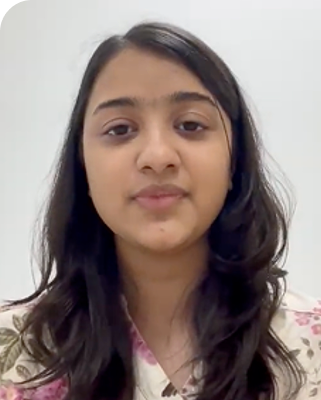
We have learned so much about the industry. I am so happy to be practicing it now.
Sanya Kulkarni

Ready to Build a Design Degree
that’s Built for the Real World?

Questions? We can read your mind

More questions?
Let our AI Assistant answer your queries

Questions? We can read your mind

ISDI provides B. Des to its students in various subjects. The undergraduate B. Des programme is a four-year course that enables students to enhance their focus on strategic thinking, design, and innovation. 

The undergraduate B. Des program offers 7 programs in various design subjects, such as:

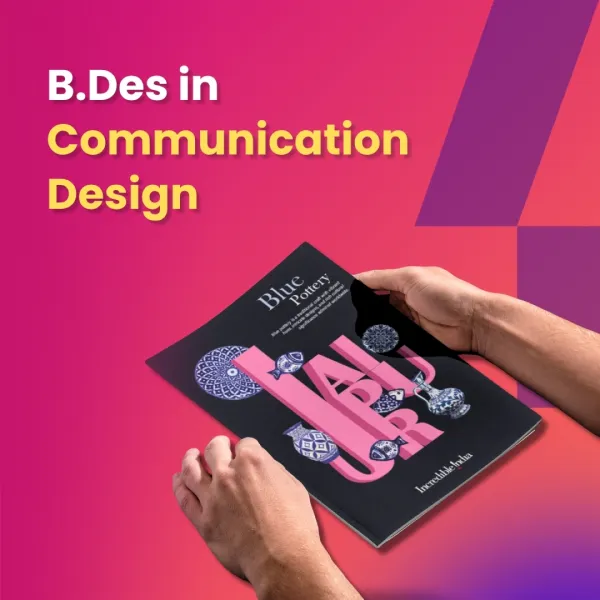
  • Communication Design

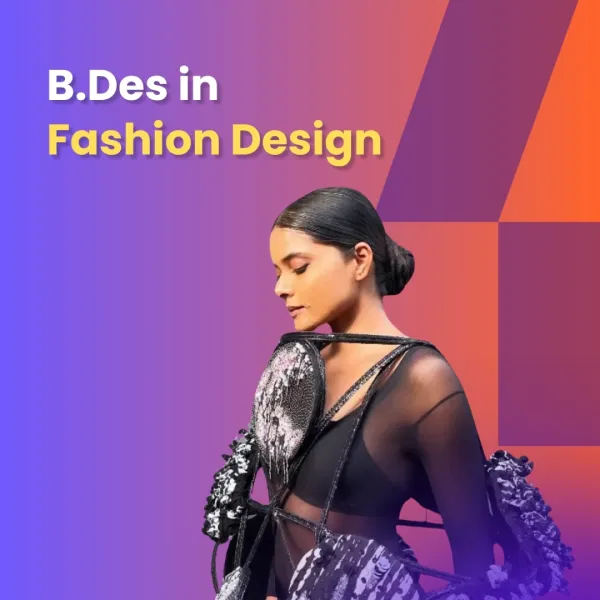
  • Fashion Design

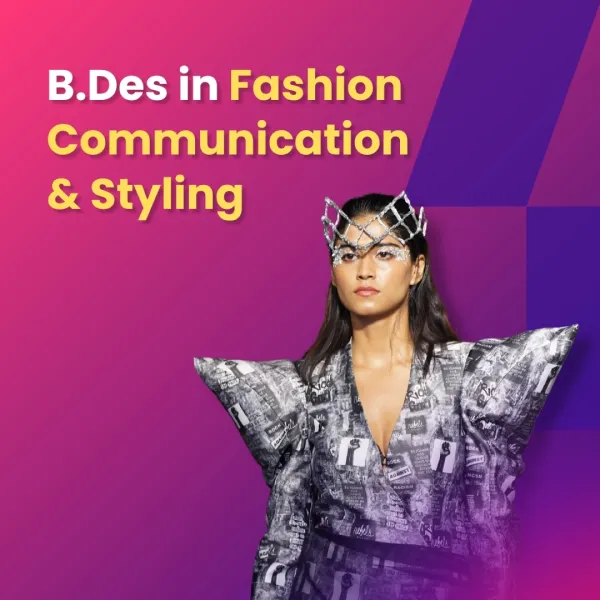
  • Fashion Communication & Styling

  • Interior Design

  • Product Design

  • Strategic Design Management

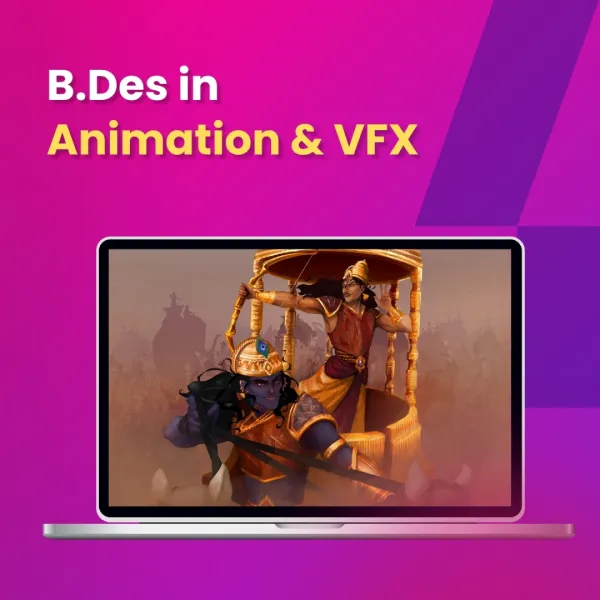
  • Animation & VFX

The postgraduate programme focuses on entrepreneurial and design thinking skills.

ISDI is a well-known institution for many reasons. Its exclusive collaboration with Parsons School of Design stems from its position as a renowned institution. The key factors setting ISDI apart are:

  • Location: It is in the heart of Mumbai and surrounded by the best design organisations.

  • Industry-focused approach: With industry stalwarts and meteors guiding students, individuals not only learn from practical knowledge but also learn from experience.

  • Networking: Students can work and interact with professionals in other fields, strengthening their networking skills. 
  • Global curriculum: The curriculum has been meticulously designed to prepare students for national and international work opportunities.

Experiential learning: ISDI believes in going beyond traditional learning, and utilises advanced technology to nurture creativity among students.

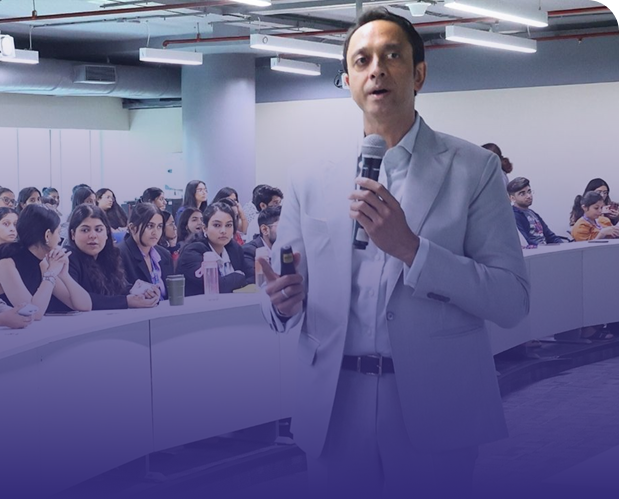
Yes, ISDI offers guest lectures and masterclasses as a part of the curriculum. International voices and mentors lead classes with its exclusive partnership with Parsons School of Design (Parsons faculty often visits ISDI and students learn from them here in India). Integrating a masterclass allows students to expand their cultural understanding, too. We introduce students to a variety of workshops and masterclasses that help expand their interests and solidify their vision.

ISDI hosted  Parsons Week 2025, in partnership with ISDI,  from March 23-28, 2025, featuring a week of design-focused events and sessions led by faculty from the renowned Parsons School of Design. During their visit to ISDI, they offered masterclasses and portfolio review sessions as well.

Yes. ISDI offers global opportunities, too. Students get opportunity to study overseas, during immersive excursion one such example is Paris where students visited colleges such as

  • Students can study in Paris and participate in industry visits and workshops. 

  • Partnership with Parsons School of Design ensures that thinking strategies, global tools, and methodologies are a part of the curriculum.

ISDI stands out from other design schools through its partnership with Parsons School of Design. Its urban-rich culture setting ensures students learn thoroughly. ISDI stands out from other design schools due to its unique features:

  • A rich curriculum benefits from its collaboration with Parsons School of Design.

  • Real-world internships and masterclasses

  • Diverse networking

  • Strategic thinking nurtured by industry experts

Yes, the curriculum is developed in collaboration with Parsons School of Design. The B Des curriculum is meticulously designed to allow students to benefit from it. The global curriculum expands their horizon of understanding and ensures they are able to face challenges and secure lucrative opportunities.

The ISDI - School of Design & Innovation has received curriculum development support from Parsons School of Design since its establishment in 2013.

This unique partnership for curricular excellence ensures ISDI students have access to a global contemporaneity curriculum and proven teaching and learning methods enabling our students to be the design leaders of the future.

ISDI has designed its curriculum in collaboration with Parsons School of Design. The curriculum ensures academic excellence and alignment with industry by:

  • Design professionals design curriculum.

  • Professionals hold masterclasses for students to learn from experience.

  • Students are encouraged to take up projects which challenge them to face real-life design challenges.

  • Working on projects with industry-leading companies

  • Regular workshops held by industry professionals

ISDI integrates industry into its curriculum in several ways. We aim to blend classroom learning with real-world experience. The industry learnings are integrated through:

  • Masterclasses with experts

  • Industry-led collaborations and projects

  • Hackathon for understanding real-life disciplines

  • Visits to different design studios for better learning

Yes, ATLAS ISDI organises live projects with brands as part of its curriculum. The thoughtfully curated curriculum is in collaboration with Parsons School of Design. The curriculum includes internships with top brands. This internship nurtures

  • Applying theoretical knowledge to real-life problems

  • Strengthen problem-solving skills

  • Build a strong portfolio

  • Learn from the experience of senior citizens.

  • Guided by industry experts

ISDI has always aimed to create a safe and immersive campus as well as a learning experience for its students. With a thoughtful curriculum in collaboration with the renowned Parsons School of Design, every design module for specialisation is distinct and focuses on strengthening the design principles. The student experience at ATLAS ISDI includes:

  • Students get to participate in various competitions, which channel their design creativity.

  • Students are made to participate in various workshops.

  • Students have to work on several projects and increase their networking and communication skills.

  • Students participate in various college festivals and experience personal growth through faculty-led discussions and talks

ISDI has an exclusive campus. Renowned for its infrastructure and thoroughly curated curriculum, the institution allows students to widen their area of learning. With our recent NAAC A Grade certification, our campus provides its students with:

  • The campus features large laboratories, designer studios, fashion technology zones, and various other spaces where students can explore and showcase their creativity.

  • Immersive workshops for strengthening design principles, along with frequent visits to design studios, inspire the students.

  • Students can learn from experts through frequent immersive workshops held in design studios.

  • Design Studios

  • Fashion Lab

  • Product Lab (Workshop)

  • Fashion Studio

  • Digital + UX Labs

  • Maker Spaces

ISDI offers its students a variety of events for them to participate in and cherish their campus life. From flagship events to cultural events, ATLAS ISDI is always thriving throughout the year. Extracurricular activities offered by ATLAS ISDI are:

  • Design Events

  • Startup-Streets

  • Industry Masterclasses, Workshops, RTCs

  • Master’s Admissions Events

  • Placement & Career Events

  • Fests & Cultural Showcase

  • Hackathons & Challenges

  • Podcasts & Fireside Chats etc.

These interactions boost engagement by allowing students to display projects, share ideas, and connect with visitors.

Yes, ISDI requires an entrance exam for design programmes. The admission process has been designed to gauge the design skills and communication skills of the students. The ISDI admission entrance exam consists of:

  • Portfolio upload or design project holding a 40% weightage

  • The online aptitude test holds a substantial weightage of 40%.

  • Along with tests, there is a round of private interviews as well, which test the students' reasoning and analytical skills.
The process to apply for ISDI’s B.Des program is extremely simple. ISDI focuses on inclusivity, and our admissions process has been designed for individuals to seek their desired design specialisation. The admission process follows these steps:

  • Submitting the portfolio

  • Those students who do not have a portfolio can also complete a design project listed by ATLAS ISDI.

  • Along with submitting a portfolio and/or design project, there is an aptitude test which gauges the student’s communication skills.

  • The last test is the private interview test. This test allows our panel to understand the ambitions and goals of the students.

ISDI is among the renowned institutions for the B. Des Program. The eligibility criteria for ISDI are:

Students currently studying in Grade 12 and appearing for their 10+2 board exams are eligible to apply. This includes boards like:

  1. CBSE

  2. ICSE

  3. HSC (Maharashtra)

  4. IGCSE A-Levels

  5. The IB Diploma Program (IBDP) 

  6. Any recognised national or international equivalent.

At ISDI, there is no stream restriction; students from Arts, Commerce, or Science backgrounds are welcome. What matters most is your interest in design, creativity, and innovation. So if you are a science student with a profound interest in design and art, you can give wings to your dreams here at ISDI.

Yes, students are required to submit their design portfolio. Students can:

  • Upload their portfolio while working on their IDSI Challenge

  • The portfolio should contain eight to ten pieces of your best work that proficiently display your design skills. 

  • These pieces can be animated, painted, or sketched according to the student's preference.

Those students who do not have a portfolio can simply:

  • Complete the ISDI Design Project

  • Create a visual work inspired by any ONE of the given themes: One World | Tracing Nature | Translating Tomorrow

  • All forms of design are acceptable, including drawing, video, photography, sculpture, 3D work, collage, and digital images. 

  • Support your project by writing a 500-word essay describing how you developed your ideas.

A. Yes, students who are not in a design program can also apply to study ISDI. We have always believed in inclusivity, and our dynamic selection process ensures that students from diverse backgrounds, including those without a design background, can apply.

Career opportunities after graduating from ISDI are innumerable. Graduates can work as:

  • Art Director

  • Brand Manager

  • Digital Transformation Analyst

  • E?commerce Brand Strategist

  • Design Consultant

  • UX Research Analyst

  • Strategy Consultant

  • Fashion Designer

ISDI has always believed in supporting students beyond their campus as well. Our committee works diligently to help students secure their desired jobs. ISDI assists students in building a strong portfolio by providing:

  • Hands-on experience working in a state-of-the-art lab with cutting-edge design tools.

  • A curriculum that emphasises experiential learning and interdisciplinary approaches will introduce projects that enable students to learn and overcome the challenges they regularly face in their field of study.

  • Our guidance and placement committee provides comprehensive support to help students secure the right internship and lucrative opportunities.

A. ISDI helps the students in building a portfolio and guiding them through job placements as well. We help students by:

  • Having projects which enhance their portfolio

  • Guest lectures and masterclasses

  • SOPs

  • Projects which are a compulsory part of modules

  • Documentation of the project as a part of the portfolio

ISDI always ensures a promising future for its students. Our committee oversees every student's secure internships with top organisations that match their specialisations and career goals. 

  • Interns can work with renowned companies.

  • Work for esteemed designers

  • Gain hands-on experience with live projects and internships

  • Committees are made to make job hunting easy.

ISDI has an astounding record for placements. ATLAS ISDI has a placement committee which works dedicatedly for every student to ensure their placements. The committee guides the students to reach out to a job where their expertise can shine. The curriculum allows students to gain skills, which are:

  • Work for alumni organisations.

  • Work on certifications, which strengthen their credibility.

  • They should maintain an attractive portfolio that aids in securing better placements.

Yes, ATLAS ISDI supports entrepreneurship. The thoughtfully curated module, in collaboration with Parsons School of Design, is designed for students to learn about the principles as well as the dynamics of business. The curriculum is mostly aimed at:

  • The curriculum aims to integrate management with technology and emerging design principles in order to enhance students' skills.

  • Students are encouraged to join the evolving design ecosystem and become innovative designers or entrepreneurs.

  • The global immersion curriculum helps students understand the complexities of the business field, which arise in the design landscape.

Yes, ISDI graduates who have completed their design programme can effortlessly open their own ventures. This can be easily achieved because:

  • ISDI curates a curriculum that includes modules on entrepreneurial leadership. The modules encourage a business mindset with innovation and design in the lead. 

  • The learning environment at ISDI is nurtured by a mentorship ecosystem where industry stalwarts lead masterclasses for students.

  • Students gain comprehensive knowledge about innovation, entrepreneurship, and practical challenges.

  • Graduates graduate with a mindset that combines design and entrepreneurship skills, which are crucial for their venture.